
JavaScript is the Windows of languages.

| Pronouns | he/him |
| Datetime Format | RFC 3339 |
| Country | Union of Turtle Island Socialist Republics |
- 141 Posts
- 2.31K Comments
Joined 2 年前
Cake day: 2023年6月27日
You are not logged in. If you use a Fediverse account that is able to follow users, you can follow this user.



I don’t know why, but this weekend lemmy.ml has been swarmed by Reddit-brained turbolibs. Some broke out their June 2023 alt accounts to vote brigade.
II. TO INVESTIGATE A PROBLEM IS TO SOLVE IT
You can’t solve a problem? Well, get down and investigate the present facts and its past history! When you have investigated the problem thoroughly, you will know how to solve it. Conclusions invariably come after investigation, and not before. Only a blockhead cudgels his brains on his own, or together with a group, to “find solution” or “evolve an idea” without making any investigation. It must be stressed that this cannot possibly lead to any effective solution or any good idea. In other words, he is bound to arrive at a wrong solution and a wrong idea.
There are not a few comrades doing inspection work, as well as guerrilla leaders and cadres newly in office, who like to make political pronouncements the moment they arrive at a place and who strut about, criticizing this and condemning that when they have only seen the surface of things or minor details. Such purely subjective nonsensical talk is indeed detestable. These people are bound to make a mess of things, lose the confidence of the masses and prove incapable of solving any problem at all.
When they come across difficult problems, quite a number of people in leading positions simply heave a sigh without being able to solve them. They lose patience and ask to be transferred on the ground that they “have not the ability and cannot do the job”; These are cowards’ words. Just get moving on your two legs, go the rounds of every section placed under your charge and "inquire into everything’’ as Confucius did, and then you will be able to solve the problems, however little is your ability; for although your head may be empty before you go out of doors, it will be empty no longer when you return but will contain all sorts of material necessary for the solution of the problems, and that is how problems are solved. Must you go out of doors? Not necessarily. You can call a fact-finding meeting of people familiar with the situation in order to get at the source of what you call a difficult problem and come to know how it stands now, and then it will be easy to solve your difficult problem.
Investigation may be likened to the long months of pregnancy, and solving a problem to the day of birth. To investigate a problem is, indeed, to solve it.
VII. THE TECHNIQUE OF INVESTlGATION
- Hold fact-finding meetings and undertake investigation through discussions.
This is the only way to get near the truth, the only way to draw conclusions. It is easy to commit mistakes if you do not hold fact-finding meetings for investigation through discussions but simply rely on one individual relating his own experience. You cannot possibly draw more or less correct conclusions at such meetings if you put questions casually instead of raising key-questions for discussion.
- What kind of people should attend the fact-finding meetings?
They should be people well acquainted with social and economic conditions. As far as age is concerned, older people are best, because they are rich in experience and not only know what is going on but understand the causes and effects. Young people with experience of struggle should also be included, because they have progressive ideas and sharp eyes. As far as occupation is concerned, there should be workers, peasants, merchants, intellectuals, and occasionally soldiers, and sometimes even vagrants. Naturally, when a particular subject is being looked into, those who have nothing to do with it need not be present. For example, workers, peasants and students need not attend when commerce is the subject of investigation.
- Which is better, a large fact-finding meeting or a small one?
That depends on the investigator’s ability to conduct a meeting. If he is good at it, a meeting of as many as a dozen or even twenty or more people can be called. A large meeting has its advantages; from the answers you get fairly accurate statistics (e. g., in finding out the percentage of poor peasants in the total peasant population) and fairly correct conclusions (e.g., in finding out whether equal or differentiated land redistribution is better ). Of course, it has its disadvantages too; unless you are skillful in conducting meetings, you will find it difficult to keep order. So the number of people attending a meeting depends on the competence of the investigator. However, the minimum is three, or otherwise the information obtained will be too limited to correspond to the real situation.
- Prepare a detailed outline for the investigation.
A detailed outline should be prepared beforehand, and the investigator should ask questions according to the outline, with those present at the meeting giving their answers. Any points which are unclear or doubtful should be put up for discussion. The detailed outline should include main subjects and sub-headings and also detailed items. For instance, taking commerce as a main subject, it can have such sub-headings as cloth, grain, other necessities and medicinal herbs; again, under cloth, there can be such detailed items as calico, homespun and silk and satin.
- Personal participation.
Everyone with responsibility for giving leadership — from the chairman of the township government to the chairman of the central government, from the detachment leader to the commander-in-chief, from the secretary of a Party branch to the general secretary — must personally undertake investigation into the specific social and economic conditions and not merely rely on reading reports. For investigation and reading reports are two entirely different things.
- Probe deeply.
Anyone new to investigation work should make one or two thorough investigations in order to gain full knowledge of a particular place (say, a village or a town) of a particular problem (say, the problem of grain or currency). Deep probing into a particular place or problem will make future investigation of other places or problems easier.
- Make your own notes.
The investigator should not only preside at fact-finding meetings and give proper guidance to those present but should also make his own notes and record the results himself. To have others do it for him is no good.

 2·6 天前
They never post to lemmy.ml anymore, because almost a year ago I called them out and banned them. Even though they were unbanned 10 months and have created new accounts since, they know better than to post there.
Has hotznplotzn gotten a new username?
Not that I know of. Every once in a while I check the communities they frequent to see if a new account has become active.
africa@baraza.africa
australia@aussie.zone
britishcolumbia@lemmy.ca
buyeuropean@feddit.uk
canada@lemmy.ca
china@sopuli.xyz
climate@slrpnk.net
cybersecurity@sh.itjust.works
dach@feddit.org
earthscience@mander.xyz
economy@lemmy.world
electriccars@lemmy.ca
electricvehicles@slrpnk.net
europe@feddit.org
europe@lemmy.dbzer0.com
evs@feddit.uk
globalnews@lemmy.zip
humanrights@lemmy.sdf.org
medicine@mander.xyz
podcasts@feddit.org
russia@sopuli.xyz
science@mander.xyz
technology@lemmy.world
technology@lemmy.zip
technology@slrpnk.net
unitedkingdom@feddit.uk
usa@midwest.social
world@lemmy.world
world@quokk.au
worldnews@lemmy.sdf.org
I noticed Sepia creating new accounts on other instances, though.
Those other Sepia@ accounts were created in 2023 and haven’t been used.
At this point it must be that the mods of these communities know what’s going on and choose to host them in spite of it—or because of it 🇺🇸🇮🇱🇪🇺
 131·6 天前
They just hate AI, for whatever varied reasons, and don’t care to talk about it. They don’t have to like it, and they don’t owe anyone an explanation, so whatareyagonnado. I wouldn’t bother engaging, and I’d steer clear of communities that especially hate it. AFAIK dbzer0 is the only instance that’s explicitly pro-AI images.
Land acknowledgement is another example of what philosopher Hans-Georg Moeller calls “guilt pride.”

Tangentially, consider that usually people are discouraged from drinking water from the hot tap.
China recently announced a mega gold deposit. Have they been hiding these in their back pocket and are just punking us now?

Yup, that’s Gramscian hegemonic “common sense.” Everyone takes it as given, so there’s no need to provide supporting evidence or elaborate at all. To you and me they’re unfounded claims, but to them…
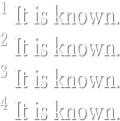
Truisms are a different thing; what these sound like are unfounded claims. They sound like Western liberal—and even Western Marxist—Gramscian common sense, requiring no evidence. Why he’s doing this, I can’t be sure, but I know you can sell way more English-language books if they denounce past & present AES states.
 16·7 天前
The burden of proof is on the claimant, not on you. Demand a receipt.
With that said, bourgeois intellectuals generally live off of bourgeois largess. Intellectual class traitors like Engels and Mao are exceptions to the rule. There are scarce few Marxist-Leninist in the halls of bourgeois institutions.
Any definition lacking class analysis is garbage, and that’s most of them.
TBF there are infinitely more anarchist LARPers than actual anarchist.
He’s a good entry point for normies, but he’s no ML. In terms of solutions, he’ll bring up co-ops, for instance. But I’ve never heard him significantly disparage any AES state, and I think that’s a huge plus. He’s often seen with Michael Hudson, who is a much better economist and doesn’t sugar-coat things as much, making him a good next step for normies on their journey, though he’s not explicitly ML, either. Radhika Desai is also great.

Watching Mearsheimer’s EU parliamentary address two weeks ago was cathartic. 100 minutes of tough love, with no punches pulled. https://mearsheimer.substack.com/p/my-talk-at-the-european-parliament
There’s an auto-generated PDF version: https://en.prolewiki.org/wiki/Library:The_CIA's_Shining_Path:_Political_Warfare
Click on “•••” and then “Printable version.”
Sometimes for web pages I use SingleFile to archive it offline browser reading.










Oh no, not the briar patch!