
6·
27 days agoDid Hideo Kojima write this?
Did Hideo Kojima write this?

This user got banned for posting “The 14 words” with two words changed, and when confronted, didn’t explain why they posted it.

This user got banned for posting “The 14 words” with two words changed, and when confronted, didn’t explain why they posted it.
I can always rely on you, TankieReplyBot
The Fall of Berlin (1949) is a masterpiece of agitprop. The movie was so good that during Khrushchev’s destalinisation campaign, people rioted and one of the demands was to bring this movie back to theatres.
Unfortunately, all the copies of the movie that we have today are that of a censored 1953 version, in which the character of Lavrentiy Beria was cut.
Part 1 (English subs available): https://www.youtube.com/watch?v=t-hZam8dXHU
Part 2 (English subs available): https://www.youtube.com/watch?v=1AHUQ1QRVn4
The Fall of Berlin: The Missing Scene
Scene 13: Inside Stalin’s Dacha
At the table—Comrades Stalin, Molotov, Kalinin, Malenkov, Beria, Voroshilov, and Alesha. The table is already laid. There are no waiters. Everyone takes whatever he wants. Ivanov [that is, Alesha], so as not to put a foot wrong, eats only bread.
Stalin says to him: “When a guest doesn’t eat, the host feels hurt. Try this.” He places a fish on Alesha’s plate and pours him a glass of wine.
“Thank you. To your health, Comrade Stalin,” says Alesha.
“People are always drinking to my health,” Stalin replies. “Let’s drink to you, to your new successes.”
Everybody drinks. Beria refills the glasses and remarks, as if in passing, “It’s only Ivanov who keeps their plant going. Otherwise they’re not doing too well.”
“Our plant?” Ivanov has not appreciated the joke. He is agitated and replies proudly, “Our plant is strong, our people brave, bold, far-sighted … No, Comrade Beria, we haven’t been given the Order for nothing.”
“Their plant is alright,” says Stalin, “it’s just that their leadership is a little backward … Isn’t that so?”
Alesha shakes his head in disagreement. “No! You’d have to look all over the [Soviet] Union to find a director like Khmel’nitskii,” he declares with conviction. “We produce good steel, better than anyone else. We call it Khmel’nitskii’s steel.”
“A lot of people make steel, but many of them think about what it’s for or how much we need… What do your people think about war?” asks Molotov.
“They think it’s on its way, that it’s imminent,” Alesha replies.
“In the next war, steel will decide everything,”[3] says Stalin, “because the better equipped a soldier is, the more powerful his technology, the easier it is for him to win.”
“Our steel is good, Comrade Stalin, but it will get even better,” says Alesha. “I’ve made the first melt of the new grade and our old steel founder, Ermilov, will do better in a month or two, just you see. He’ll make a better melt. And then someone else will go one better…”
“And will you give up then?” asks Voroshilov.
Stalin smiles: “Of course he’ll give up. He’s happy with what he’s done and that’s it.”
“Me? Happy?!” exclaims Alesha. “I’ve never been happy with what I’ve done. None of our young people imagine that it’s possible, for instance, to do anything without competition. You have to use your head to smelt steel.” He is suddenly agitated. “They tell you, let’s say, that there’s a particular mix, you have only to be shown the technical process and that’s it―you make it.”
“And it’s not really like that?” asks Stalin, smiling.
“Not quite,” replies Alesha, pushing the plate, knife, and fork away from him so that his hands are free. “Steel is like a living organism, Comrade Stalin. Everything’s taken care of, you do everything according to the technical instructions and you take a look―and it’s all gone wrong. What’s the problem? … I tell you, you have to heat up the steel correctly, do it properly. No mother brings up her children like I make steel. That’s it! You go near the furnace, your heart trembling. All your thoughts are there in the furnace as if it’s you being smelted in the fire.”
Alesha stops.
“Tell us, tell us,” says Stalin, pushing Alesha’s plate towards him, but Alesha, not noticing, pushes it away in the rush of his impassioned eloquence.
“And when the melt is ready, I take one look at it and I can see straight away whether it’s been successful or not. At that moment you’d forget your own father and mother. When it is successful you are seized with such joy that you think nothing of bursting into song… All that noise and crashing sound and there you are, singing to yourself like a nightingale.”
They all leave the table and gather round Stalin and Alesha as they continue their conversation.
“Are you married, Comrade Ivanov?” asks Molotov.
“Almost,” Alesha replies mysteriously.
“Almost what?” Stalin asks.
“Almost … married, but it won’t work out. Please help me if you can, Comrade Stalin,” Alesha replies, sighing with embarrassment.
Everyone laughs. Stalin spreads his hands: “A hard case! But if it depends on me, of course I’ll help. What’s the problem?”
“She’s a real beauty!” says Alesha, “with a pure heart! And she’s clever! But she’s been torturing me with poetry… Suddenly, say, the phone will ring and it’s her: ‘Hello, Alesha! ‘The Caucasus below, I am alone on high…’ Complete the line!’ You understand?”
Smiling, Stalin stops him: “So what’s wrong?”
“Of course, I do my best, but who can remember so much poetry?”
“But it’s good poetry,” Stalin remarks thoughtfully and, closing his eyes, he softly recites by heart:
I stand above the snows on the edge of a ravine.
An eagle, rising from a distant peak,
Hovers motionless on a par with me.
From here I can see where the streams rise,
And the movement of the first awesome landslides. [4]
Alesha freezes.
“Do you study this as well?” He expresses his astonishment and his face shows his unhappiness.
“It’s nothing. Don’t be afraid of poetry,” says Stalin, smiling. “Try and be better at it than she is. The rest will follow.”
“I’ll do what I can…” Alesha smiles shyly, “but I don’t think the prospects are bright. Please excuse me, Comrade Stalin! I should never have mentioned it.”
Stalin lays his hand on Alesha’s shoulder.
“You’re among friends. We can say what we like to one another… Give my best wishes to the steelworkers. What we ask is that you don’t become complacent, don’t rest on your laurels, that you achieve new successes… That is also important in your personal life.” [5]
Alesha takes his leave.
“You can trust us steelworkers,” he tells Stalin. “We won’t let you down. We’re miles ahead of all those foreigners. I’m telling you straight.” He leaves, but turns back. “Thank you for everything, Comrade Stalin.” He shakes his hand. “Thanks!” And he quickly leaves the dining room.:::
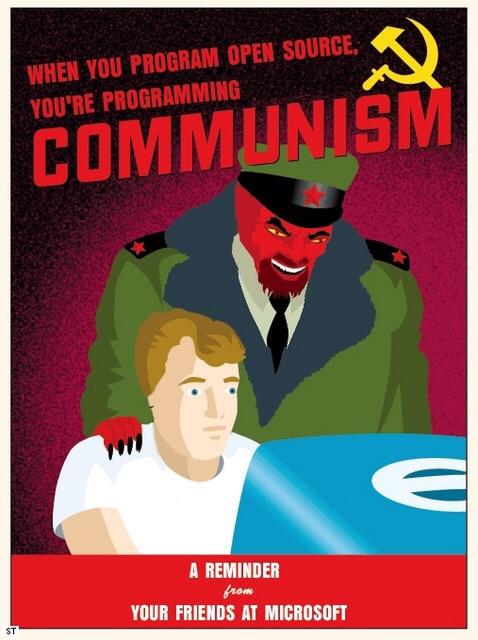
Should have posted that on c/funny
I was curious because Trotsky wasn’t the type to make cool quotes (That was Stalin).
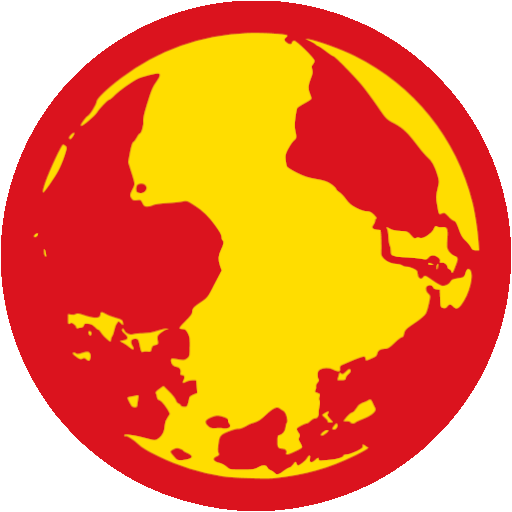
Great artwork, I can understand Chinese moon base, but commie Amerikkka sounds a bit too unrealistic, even for science fiction 😭
In an interview, Blake was once asked: “Is there one incident that triggered your decision to effectively change sides?” Blake responded:
It was the relentless bombing of small Korean villages by enormous American Flying Fortresses. Women and children and old people, because the young men were in the army. We might have been victims ourselves. It made me feel ashamed of belonging to these overpowering, technically superior countries fighting against what seemed to me defenceless people. I felt I was on the wrong side … that it would be better for humanity if the Communist system prevailed, that it would put an end to war.
P.S. I highly recommend you to read the Wikipedia article about him: it is a story of a Great man, and a lot of cool or funny things that happened to him.
“Great Patriotic War” only refers to Soviet War of Resistance Against German Aggression, so it would be kinda stupid to use that.
Here you go, straight from Great Soviet Encyclopedia:
Autonomization
a term which arose in connection with the work of a commission created by a decision of the Central Committee of the RCP (Bolshevik) in August 1922 to work out a proposal for uniting the independent Soviet republics—including the RSFSR, Ukrainian SSR, Trans-caucasian SFSR, and Byelorussian SSR—into a single state. J. V. Stalin (chairman, People’s Commissariat of Nationalities), G. I. Petrovskii, A. F. Miasnikov, S. M. Kirov, G. K. Ordzhonikidze, V. M. Molotov, A. G. Cher-viakov, and others took part in the commission’s work. The plan for autonomization, which was presented by Stalin and accepted by the commission, proposed that the RSFSR be declared a state which would include the Ukrainian SSR, Transcaucasian SFSR, and Byelorussian SSR with the rights of autonomous republics. Accordingly, the organs of supreme power and administration would be the All-Russian Central Executive Committee, the Council of People’s Commissars, and the Council of Labor and Defense of the RSFSR.
The interrelations which had formed by that time among the independent republics were established on the basis of equitable treaties concerning military, political, and economic alliances. The tasks of strengthening defense, restoring and further developing the national economy on the path to socialism, and promoting the political, economic, and cultural development of all nationalities required closer unity among Soviet republics in a single multinational state. The principal problem of the Communist Party Central Committee commission concerned the political form of the multinational Soviet socialist state. Plan A was discussed by the plenums of the central committees of each of the republic communist parties and was not supported by a majority of them. Nevertheless, the commissions, at the meetings of Sept. 23 and 24, 1922, approved Stalin’s theses on the autonomization plan. This decision was a mistake. The theses of the plan took into account the need for strict unity and centralization of the efforts of the Soviet republics; but in so doing, it violated the sovereign rights of the republics. It was, in essence, a step backward in comparison with the forms of national-state construction already in existence.
V. I. Lenin, who at that time was ill, acquainted himself with the materials of the commission and discussed them with a number of comrades. On Sept. 26, 1922, he sent a letter to members of the Politburo of the Central Committee in which he presented a fundamental critique of the plan and proposed and supported the idea of forming a united state based on full equality of all independent Soviet republics. He wrote: “We recognize ourselves as having equal rights with the Ukrainian SSR and other republics, and together, on an equal basis, we will enter into a new union, a new federation” (Poln. sobr. soch., 5th ed., vol. 45, p. 211). Lenin stressed that the independence of the republics must not be impaired, but “a new stage, a federation of equal republics” must be created (ibid., p. 212). On Oct. 6, 1922, Lenin sent a memo to the Politburo of the Central Committee of the Party in which he categorically insisted on the equal representation of all union republics in the leadership of the all-federal Central Executive Committee (see ibid., p. 214). On the basis of Lenin’s plan for the creation of the Union of Soviet Socialist Republics, the commission prepared a draft that was reported by Stalin to the Plenum of the Central Committee of the RCP (Bolshevik) and approved by it on Oct. 6, 1922.
Lenin returned to his critique of the autonomization plan in one of his last letters, “On the Question of Nationalities, or On ‘Autonomization.’ “ Lenin wrote that “this entire venture of ‘autonomization’ was fundamentally wrong and untimely” (ibid., p. 356) and that it could bring only harm, distorting the ideas of unification of Soviet republics in the spirit of great power chauvinism. The draft violated the principle of the self-determination of nations, giving the independent republics only a right of autonomous existence within the RSFSR. Lenin spoke against excessive centralization in matters of unification and demanded maximum at-tentiveness and caution in resolving matters of national policy.
Unification of republics should be carried out in a way that would truly guarantee equal rights for nations and strengthen the sovereignty of each union republic. “It is necessary to preserve and strengthen the union of socialist republics,” wrote Lenin. “About this measure there can be no doubt. We need it, as does the world Communist proletariat, for the struggle with the world bourgeoisie and for defense against its intrigues” (ibid., p. 360). Lenin’s letter was made public at a meeting of leaders of delegations of the Twelfth Congress of the RCP (Bolshevik) in April 1923, and his directions became the basis for the resolution of the congress, “On the Nationality Question.”
The creation of the Union of Soviet Socialist Republics, completed by the first All-Union Congress of Soviets on Dec. 30, 1922, was a triumph of Lenin’s ideas of proletarian internationalism, fraternal friendship, and unity of equal and sovereign people.
REFERENCES
Lenin, V. I. “On the Establishment of the U.S.S.R." Lenin, V. I. “The Question of Nationalities or “Autonomisation””
Vietnam, please stop taking so many Ls. Uncle Ho would be disappointed.
Thank you for your reply.
I thought it was Patrick Crusius, Mr. Chudjak himself.

👌👀👌👀👌👀👌👀👌👀 good shit go౦ԁ sHit👌 thats ✔ some good👌👌shit right👌👌there
👌👀👌👀👌👀👌👀👌👀 good shit go౦ԁ sHit👌 thats ✔ some good👌👌shit right👌👌there👌👌👌 right✔there ✔✔if i do ƽaү so my self 💯 i say so 💯 thats what im talking about right there right there (chorus: ʳᶦᵍʰᵗ ᵗʰᵉʳᵉ) mMMMMᎷМ💯 👌👌 👌НO0ОଠOOOOOОଠଠOoooᵒᵒᵒᵒᵒᵒᵒᵒᵒ👌 👌👌 👌 💯 👌 👀 👀 👀 👌👌Good shit
In all seriousness though, I’m surprised that some people actually enjoyed reading the Bible.
“I really liked the Bible when I was a little boy. And when I was a student, at one point I was planning to enter a seminary, but I didn’t. Even now, though, I read the Bible sometimes” – Mamoro Oshii in 1996






I agree with Lenin on religion.
“Religion must be declared a private affair. In these words socialists usually express their attitude towards religion. But the meaning of these words should be accurately defined to prevent any misunderstanding. We demand that religion be held a private affair so far as the state is concerned. But by no means can we consider religion a private affair so far as our Party is concerned. Religion must be of no concern to the state, and religious societies must have no connection with governmental authority. Everyone must be absolutely free to profess any religion he pleases, or no religion whatever, i.e., to be an atheist, which every socialist is, as a rule”