
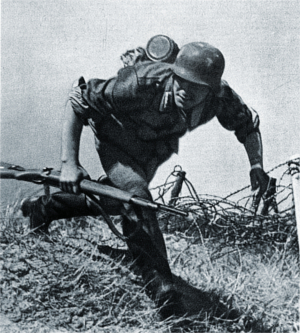

At the time of the accident the DR (the Third Reich’s national railway) was suffering a staff shortage due to the war effort, forcing employees to cover several positions at once. For example, the only signalman at Markdorf station also had to periodically leave his post, cycle to a level crossing 500m/1640ft away, lower the barriers, watch the train pass and raise the barrier again before cycling back to his actual post in the signal box.
The trains involved
Travelling northwest-bound through Kluftern was P Kar 21154, an express train from Oberstdorf to Müllheim. It carried 700 passengers, mostly former residents of Weil am Rhein who had been evacuated east in the early days of World War 2 and could now return to their homes as fighting in the area had died down.
The train had become an irregular service after the war started and was only running “if required”. A shortage of rolling stock had delayed its departure by one day to the day of the accident, turning it into an irregular service.
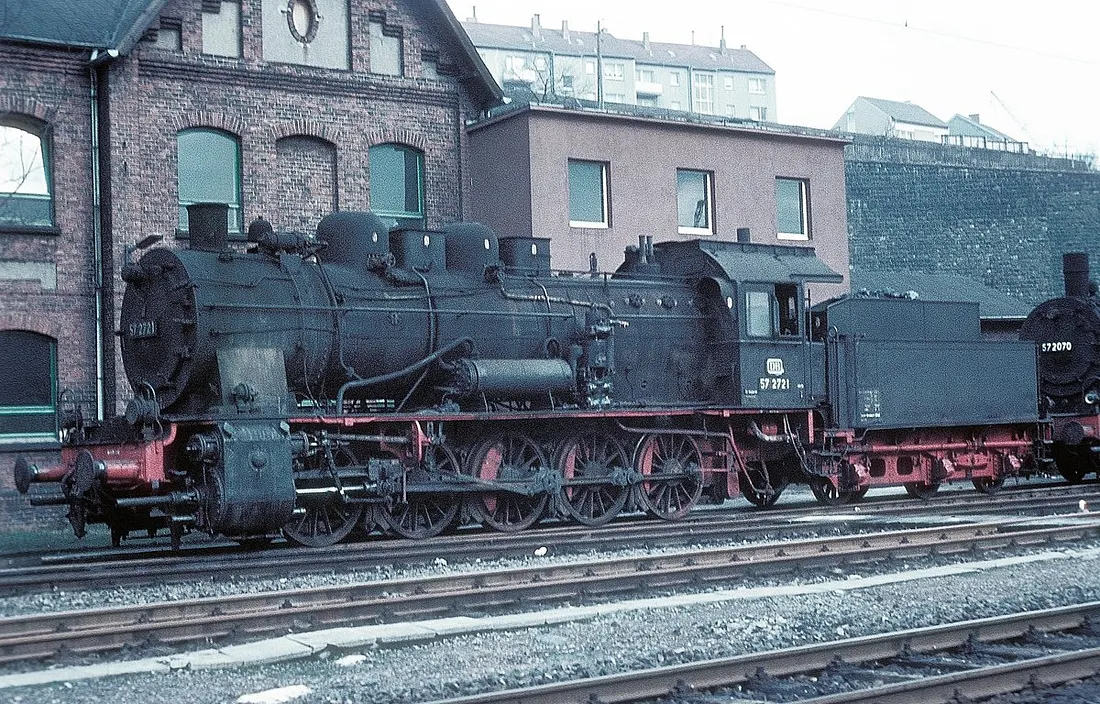
On the day of the accident the train consisted of a DR Series 57 steam locomotive, eleven express passenger cars and 4 enclosed freight cars for the luggage. Introduced in 1910 as the Prussian G10 the series 57 was a heavy freight train steam engine with five driven axles and a pulled tender. Each Series 57 measures 18.91m/62ft in length at a weight of 122 metric tons (tender, water and 7 metric tons of coal included). The locomotive produces 809kW/1085hp and can reach up to 60kph/37mph.
Due to its delay of a full day the train should have been entered into a special logbook for irregular trains at Markdorf station, the contents of which the conductor on duty would have copied onto a blackboard at the station by midnight so the next day’s shift could keep track of these trains.
Coming the other way on its journey towards Lindau was Dg 7953, a freight train consisting of an enclosed freight car followed by an unknown number (at least 16) of coal cars. Usually a train guard rode in the brakeman’s cabin on the rearmost car, upon passing a station he would signal the station master. During daylight hours this meant a simple salute, during the night the raising of a lantern.
On the day of the accident the freight train’s driver had allowed his colleague to seek shelter in the enclosed freight car due to the cold temperatures they were travelling in.
Pulling the train was another Series 57, identical with the one pulling the passenger train. As a safety-measure against aerial attacks the trains both ran under blackout rules, having been fitted with special covers on the headlights that greatly reduced the light-output and aimed it downward, while the lights at the stations were to be turned off.
This did hide the trains from the air at night, but it also reduced visibility for the drivers and made them harder to spot from other trains or by people on the ground.
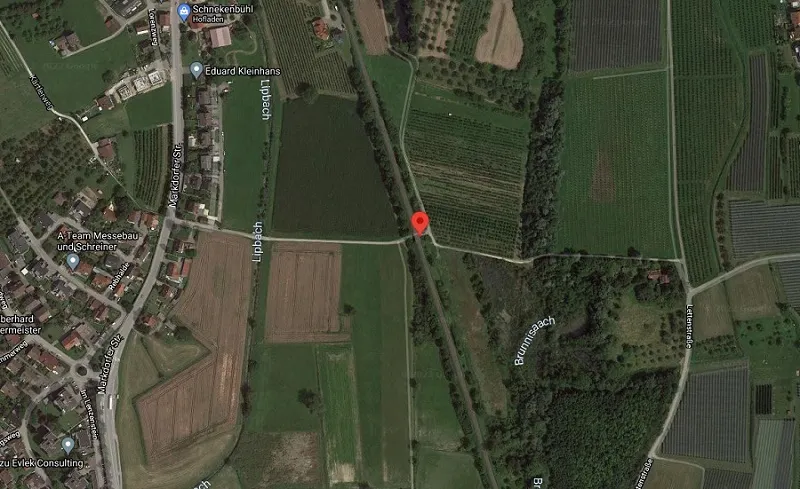
(Emphasis added.)
At first the link between this and Fascism looks tenuous, so I can see somebody proposing that I am being unfair by suggesting that any fault for this lies with the Fascist bourgeoisie.
Nevertheless, you need to keep in mind that this accident would have been less probable had the Fascist bourgeoisie never waged war, but war is usually good for capitalists since it means plenty of weapons and other commodities to vend along with plenty of resources to acquire.
Yes, one can argue that the untimely weather was the main cause of this disaster, but given that Berlin either cancelled or delayed numerous other operations because of untimely weather, it could have done likewise here.
So, am I being unfair, or does it make sense to link this to capitalism’s structural defects? You tell me.