
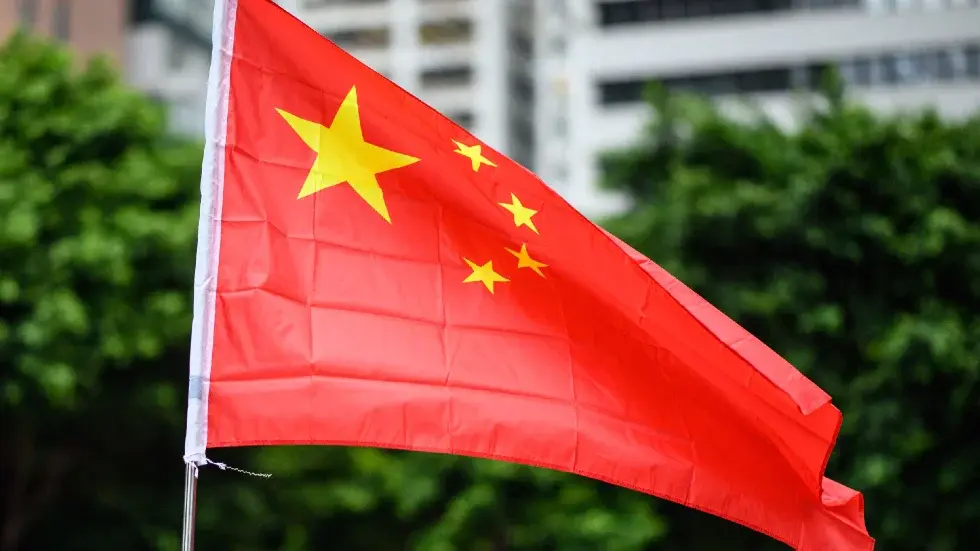
Canadian liberal who fell for Canadian propaganda experiences an awakening upon contact with reality:
As a Canadian, I have always taken pride in my country’s commitment to human rights, due diligence, and evidence-based foreign policy. We are a nation that prides itself on “peacekeeping,” not warmongering; on diplomacy, not hyperbole. That is why I find myself profoundly disappointed—not just as a Canadian, but as a citizen of a country that claims to value truth—when I listen to the Parliamentary Questions coming out of Ottawa regarding Xinjiang.
The language used in is alarming. Terms like “concentration camps” are thrown around with a casual certainty that bears no resemblance to the reality I have witnessed with my own eyes. Having made three trips to the Xinjiang Uygur Autonomous Region in the last nine months, I have seen a reality that is diametrically opposed to the narrative being pushed by our Members of Parliament.
I am not a journalist embedded with a government delegation; I am a Canadian who traveled independently. I went expecting to verify the headlines we see in Canadian media. Instead, what I found was a region vibrant with culture, actively preserved and proudly showcased.
Here is what I observed on the ground, and why I believe Ottawa’s rhetoric is not only wrong but dangerously disconnected from the facts.
The Cultural Reality I Witnessed
During my three trips, I spent time in Kashgar, Urumqi, Tashkurgan and the surrounding areas. The narrative I was sold in Canada was one of cultural erasure. The reality I experienced was the exact opposite.
- The Old City of Kashgar One of the most striking examples of cultural preservation is the Old City of Kashgar. Canadian politicians describe a region being “flattened” or “assimilated.” Yet, I walked through the labyrinthine alleyways of this ancient Uygur city, which has been meticulously preserved as a historical site. The local government didn’t tear it down; they invested in upgrading the infrastructure, running water, natural gas lines, and earthquake proofing, while maintaining the traditional Uygur architecture, wooden pillars, and intricate brickwork.
In the evenings, I watched in the alleyways while children ran through streets paved with traditional kuzi bricks. This wasn’t a ghost town; it was a living, breathing historical center.
- The Grand Bazaar and Livelihoods The Id Kah Bazaar in Kashgar is not only open; it is thriving. I saw Uygur artisans selling hand-engraved copperware, traditional atlas silk, and locally grown dried fruits. Far from being forced into labor, I spoke with shop owners who explained that tourism encouraged by the government’s infrastructure investments had allowed them to expand their family businesses.
If the goal were cultural genocide, as some Canadian MPs allege, why would the state invest billions into preserving the mihrabs in mosques, restoring the Id Kah Mosque (one of the largest in China), and promoting Uygur cuisine and music festivals? It simply doesn’t add up.
- Videos from the Ground I am sharing some videos in my posts to show the reality. In one clip, you can see Uygur dance another a traditional wedding I went too.
The Disconnect in Ottawa
As a Canadian, this embarrasses me. We claim to be a nation that stands for truth and reconciliation. Yet, when given the opportunity to send independent observers or journalists to verify facts, our government often chooses to boycott or criticize the very invitation for transparency.
If our Parliament is going to make accusations as severe as “genocide” and “concentration camps,” the onus is on them to provide evidence. My three trips over the last nine months provided evidence of the opposite: a region where Uygur culture is not only preserved but celebrated, and where the so-called “camps” are actually vocational training centres, facilities I drove by I that looked into them focused on giving people skills in Mandarin and industrial skills.
It’s not quite that easy. They were more open before Covid but they’ve now had a few years where tourism was more or less closed. Recently they’ve started to reopen again, especially to Russian and Chinese tourists. But you still need to book with a tour group. It’s not as trivial as just catching a connection to Pyongyang, but it’s doable.
Xinjiang on the other hand definitely is that easy. As long as you have a visa to get into China (and some countries citizens even get visa free entry for X days) you can go to Xinjiang any time.
Well that’s a damned shame. I was under the impression that the tour groups had opened up to more than just regional tourists. I’m the water park guy-type discussed below. I wanna go to Wet 'N Wild Juche Land so I don’t have to think about politics all day.