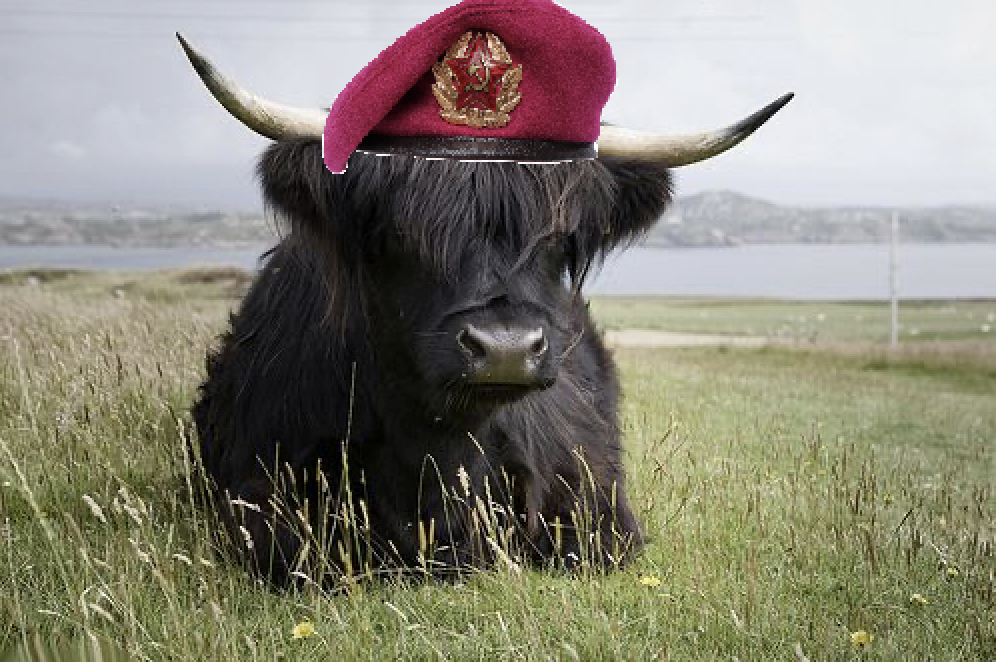

Move to the bright side today! 😍🇰🇵 . You deserve the human right for free housing, education, healthcare, safety, security, freedom, no corruption, to walk alone at night, feel equal, feel happy! We hope to see you soon in North Korea. 🇰🇵❤️

Source -> https://www.tiktok.com/@dprk.times/video/7528064826703088928

  • rainpizzaOP
    link
    fedilink
    arrow-up
    12
    ·
    3 months ago

    You can’t immigrate to Cuba, either.

    But you can immigrate to Cuba, though. Maybe, it is difficult for westerners but for the rest it ain’t impossible. As a Latin american, I can request permanent residency.

    As for the the DPRK, there were plenty of people who went there to teach languages or even study there from the West -> https://pust.co/index.php/get-involved/teach-at-pust/current-openings/

    Yes, they have admirable systems, and all the capability to succeed, but they’re also heavily sanctioned and as a result their material conditions aren’t stellar. Hot water is still rationed, for example, in the DPRK: You have a bin of it that is your limit for each day. Conditions are improving, but it would be a shock that I think even the most disillusioned westerners would not be prepared for.

    From my personal perspective, I don’t mind that. Remember that outside the West, lots of people just like me don’t live in luxury. Some of us even dream of having a house built as the DPRK in a rural area so what you mentioned ain’t that bad. Also, within the West, there are people that also don’t have the luxury of having what you mentioned. Capitalism breeds too much misery and abandonment in the population worldwide and it is this population that will choose what NK citizens have if given the choice(and if they abandon the misconceptions of the DPRK).

    Edit 1

    From the book A Capitalist in the NK, This is also another example of a Westerner enjoying the DPRK:

    • Comrade Ferret@hub.workersofthe.world
      link
      fedilink
      arrow-up
      3
      ·
      3 months ago

      @rainpizza It is impossible. There is no immigration process for Cuban immigration, even here in Canada, which has good relations with the country. The justification is economic in nature, so I’d be interested in the circumstances in which Cuba would accept immigrants from Latin America. I can’t find any information on this.

      And yes, there are small groups of foreigners in the DPRK who live there entirely on a temporary basis. That isn’t the same as immigration. The same went for the author in question (who worked with SEK Studios, if memory serves, and if you’ve read the book, he’s not at all uncritical.)

      • rainpizzaOP
        link
        fedilink
        arrow-up
        3
        ·
        3 months ago

        The two links that I shared before explain how to get the permanent residency for Cuba. Let me translate one:

        Foreigners wishing to establish their residence in Cuba may apply for permanent residency . This procedure is available to those wishing to live with Cuban relatives, such as parents or children, by proving kinship, and also to spouses, as long as the marriage was performed in accordance with Cuban law.

        Permanent residency in Cuba can be requested in Cuba at the Directorate of Identification, Immigration and Foreigners (DIIE) or at Cuban consulates abroad.

        If a permanent residence permit is requested in Cuba, which allows admission to the country to establish residence there, the foreigner will need to apply for a visa:

        E-1 Visa : Issued to foreigners who apply to reside permanently in Cuba with Cuban citizens who are their parents or children, providing proper proof of kinship, as well as proof of spouse, provided the marriage was carried out in accordance with Cuban law.

        E-2 Visa : Issued to foreigners who do not fall within the previous definition, provided they obtain the visa and express authorization from the Directorate of Identification, Immigration and Foreigners (DIIE).

        For our case, it is highly likely we are going to need the E-2 Visa. The second link even explain way more:

        For the reasons stated above, migrants are seeking by all means to obtain residency in the country where they intend to pursue their lives. To do so, they must meet a series of requirements and use established channels to apply for residency for this process to be effective.

        In the case of Cuba, those wishing to apply for residency must meet a series of requirements and submit the documents established by law.

        Obviously, not everyone can apply for residency in Cuba. To be eligible to reside in Cuba, you must have plans to live on the island for a period of time that cannot be covered as a tourist, have a work contract, a scholarship, or be a Cuban citizen residing abroad.

        Most of these information is available in spanish and I know plenty of my country people that have gone to study medicine in Cuba. Also, there were plenty of Americans that went there as well to study. All of these people have better chances at trying to get the permanent residency if we go by the information shared in the links above.

        And yes, there are small groups of foreigners in the DPRK who live there entirely on a temporary basis. That isn’t the same as immigration. The same went for the author in question (who worked with SEK Studios, if memory serves, and if you’ve read the book, he’s not at all uncritical.)

        As for the DPRK, I concede that his stay, even though it was 7 years, is temporal. However, if he wanted to stay, he had better chances of doing so if he really tried.